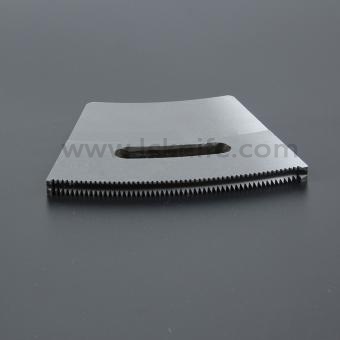
Wenn Material und Wärmebehandlung den künstlerischen Ausdruck einer Klinge darstellen, warum gilt dann der Schleifprozess als die mikroskopische Kunst, die ihre Lebensdauer bestimmt?
Das Klingenschleifen ist weit mehr als nur das Formen einer Kontur. Während das Grundmaterial die „theoretische ultimative Lebensdauer“ einer Klinge vorgibt, besteht ihre Oberflächen-Mikrotopographie tatsächlich aus zahllosen mikroskopischen Schnittspuren, die während der Bearbeitung von Schleifkörnern auf der Schleifscheibe eingearbeitet wurden. Die Formung der Schneidkante, die Oberflächenspannung und mikroskopische Defekte im Mikrometer- oder sogar Submikrometerbereich bestimmen direkt die Schnittpräzision und Haltbarkeit. Es ist ein unsichtbarer, hochpräziser mikroskopischer Bildhauereiprozess. Die Schleifqualität der Schneidkante bestimmt direkt die Größe der Scherkanten, die Ebenheit des Schnitts und die allgemeine Lebensdauer der Klinge.
Folglich üben das Schleifmittel, die Korngröße und die Härte der Schleifscheibe einen tiefgreifenden Einfluss auf die Ebenheit, die Oberflächengüte und sogar die metallurgische Struktur der Klinge aus. Um die Oberflächenqualität signifikant zu verbessern, muss der Schleifprozess fein abgestimmt werden, um:
-
Mikrorisse an der Kante zu eliminieren
-
Den optimalen Kantenradius (Hone) zu formen
-
Die oberflächliche Eigenspannung zu kontrollieren
-
Oberflächentextur und Rauheit zu verwalten
-
Thermische Brand-Metamorphoseschichten zu vermeiden
Schleifscheibentypen und Auswahl
1. Normalkorund (A) — Spezialisiert auf Grobschleifen und Kantenvorbereitung
-
Scheibeneigenschaften: Mittlere Härte, hohe Zähigkeit, hohe Temperaturbeständigkeit. Beim Grobschleifen werden typischerweise gröbere Körnungen (wie 46# bis 60#) mit keramischer Bindung, hoher Porosität und starker Spanabfuhrkapazität verwendet.
-
Auswirkung auf Klingeneigenschaften: Geeignet für schnelles Schneiden mit hohem Aufmaß. Während es eine hohe Schleifeffizienz gewährleistet, machen die gröberen Schleifkörner die Ebenheit leicht kontrollierbar, führen jedoch zu einer geringeren Oberflächengüte (höherer Rauheitswert, mit bloßem Auge sichtbare Schleifspuren).
-
Auswirkung auf die Leistung: Hauptsächlich in der Schruppphase von gewöhnlichen Kohlenstoffstahl- und niedriglegierten Werkzeugstahlklingen (wie 9CrSi) verwendet. Es entfernt schnell Wärmebehandlungszunder oder Formaufmaße. Wenn es jedoch direkt beim Schlichten angewendet wird, erhöht die raue Schneidkante die Reibung beim Scheren, wodurch Blechmaterialien anfällig für Gratbildung werden.
2. Edelkorund (WA) — Hocheffizientes Präzisionsschleifen für gehärtete Stahlklingen
-
Scheibeneigenschaften: Höhere Härte als Normalkorund, extrem scharfe Schneidkanten, aber geringere Zähigkeit. Beim Präzisionsschleifen werden üblicherweise mittlere Körnungen (wie 60# bis 80#) verwendet.
-
Auswirkung auf Klingeneigenschaften: Außergewöhnliche Selbstschärfungsfähigkeit bei geringer Schleifwärme, was lokales Anlassen (Verbrennungen) oder Mikrorisse in hochlegierten Stählen und Schnellarbeitsstählen während des Schleifens effektiv verhindert. Es verleiht der Klinge eine überlegene Ebenheit und eine vorteilhafte Oberflächengüte.
-
Auswirkung auf die Leistung: Klingen, die mit WA-Scheiben geschliffen wurden, weisen minimale Mikrodefekte entlang der Schneidkante auf. In praktischen Scheranwendungen reduziert die hochglanzpolierte Kante die Adhäsion und Reibung gegenüber Blechmaterialien, was die Verschleißfestigkeit und Ausbruchfestigkeit signifikant erhöht.
3. Chromkorund (PA) — Hohe Oberflächengüte und Präzisionsprofilschleifen
-
Scheibeneigenschaften: Chrom, das dem Edelkorund zugesetzt wird, bietet eine Kombination aus hoher Härte und hoher Zähigkeit mit exzellenten Kantenhalteeigenschaften. Feine Körnungen wie 80# bis 100# werden häufig verwendet.
-
Auswirkung auf die Leistung: Liefert eine Mikroschneidwirkung, um außergewöhnlich hohe Oberflächengüten (nahe an Spiegeleffekten) zusammen mit strenger Ebenheit und Parallelität zu erreichen, wodurch sichergestellt wird, dass die Klingengeometrie unverzerrt bleibt.
-
Auswirkung auf die Leistung: Speziell für hochwertige wärmebehandelte Klingen wie Formenstahl und Werkzeugstahl entwickelt. Die ultrahohe Oberflächengüte ergibt sauberere, flachere Schnittquerschnitte beim Scheren von Edelstahl oder dünnen Blechen, was Werkstückgrate drastisch reduziert und die kontinuierliche Betriebszeit verlängert.
4. Grünes Siliziumkarbid (GC) — Spezialschleifen für Hartmetalleinsätze
-
Scheibeneigenschaften: Extrem hohe Härte (nur von Diamant und kubischem Bornitrid übertroffen), spröde und hoch wärmeleitfähig. Aufgrund der schwer zu bearbeitenden Natur von Hartmetall werden typischerweise feinere Körnungen (80# bis 120#) gewählt, um Kantenausbrüche zu verhindern.
-
Auswirkung auf die Leistung: Fähig zum Hochleistungsschneiden auf ultraharten Materialien, wobei die Geradheit und Mikroebenheit der Einsatzschneidkanten sichergestellt wird, während Mikrokantenbrüche an Kantenübergängen verhindert werden.
-
Auswirkung auf die Leistung: Stellt die Schärfe und Festigkeit von Hartmetall-Verbundklingen unter hochintensivem Schwerlastscheren sicher und verhindert grundlegend vorzeitigen Bruch oder Verschleiß, der durch Mikrokantendefekte verursacht wird.
5. Optimierung der Bewegungsparameter
Über die Auswahl eines geeigneten Schleifscheibentyps hinaus ist die Optimierung der Bewegungsparameter der Scheibe entscheidend – ein Faktor, der von erfahrenen Bedienern stark priorisiert wird: Maximieren Sie die Umfangsgeschwindigkeit der Schleifscheibe bei gleichzeitiger moderater Reduzierung der Umfangsgeschwindigkeit und des Längsvorschubs des Klingenwerkstücks. Dies stellt sicher, dass die mikroskopischen Kratzer auf der Klingenfläche außergewöhnlich gleichmäßig und fein sind, was zu einer erstklassigen Oberflächengüte führt, die den Schnittwiderstand reduziert, Reibungswärme minimiert und Kratzer auf der Bandoberfläche verhindert.
Anpassung der Scheibenauswahl für drei verschiedene industrielle Anwendungen
Das Material, die Korngröße und die Härte der Schleifscheibe bestimmen direkt die Mikrogeometrie, den Oberflächenspannungszustand und die Kantenlebensdauer des Werkzeugs. Nachfolgend untersuchen wir die spezifischen Auswirkungen und Optimierungsprioritäten in drei verschiedenen Anwendungsszenarien: Metallurgie, Papierverarbeitung und Lebensmittelherstellung.
I. Werkzeuge für die metallurgische Industrie: Schlagfestigkeit und Beständigkeit gegen thermische Rissbildung unter Schwerlastbedingungen
-
Anwendungskontext: Metallurgische Werkzeuge wie H13-Materialwerkzeuge, Warmscherklingen, Fliegende Scheren und Scherklingen für mittelstarke Bleche arbeiten in extrem rauen Umgebungen und ertragen massive mechanische Stöße und wechselnde thermische Spannungen (oft unter Einbeziehung von Warmscheren). Diese Werkzeuge sind typischerweise groß und haben schwere Bearbeitungsaufmaße.
-
Auswirkung der Schleifscheibenauswahl: Die Wahl einer ungeeigneten Härte oder Bindemittel – wie die missbräuchliche Verwendung einer zu harten Normalkorundscheibe – erzeugt übermäßige Schleifwärme bei der Bearbeitung großer Querschnitte. Übermäßige Hitze induziert verstecktes „sekundäres Abschrecken“ oder mikroskopische Verbrennungen auf der Werkzeugoberfläche, was schwer zu erkennende Mikrorisse auslöst. Unter schweren metallurgischen Stoßbelastungen breiten sich diese Risse schnell zu weit verbreiteten Kantenausbrüchen oder totalem Klingenbruch aus.
-
Optimierungsstrategie: Priorisieren Sie mittelweiche Edelkorundscheiben und nutzen Sie deren exzellente Selbstschärfungseigenschaften, um die Wärmeakkumulation zu minimieren. Implementieren Sie ein sorgfältiges temperaturgesteuertes Schleifen, um ein „kaltes“ oder wärmearmes Schleifen zu erreichen, wodurch die Stabilität der internen Metallmikrostruktur bewahrt und maximale Zähigkeit und Ermüdungsbeständigkeit unter hochfrequenten Schwerlaststößen sichergestellt wird.
II. Kreismesser für Papierschneidemaschinen:
Erreichen von hoher Präzision, gratfreier Leistung und überlegener Oberflächengüte
-
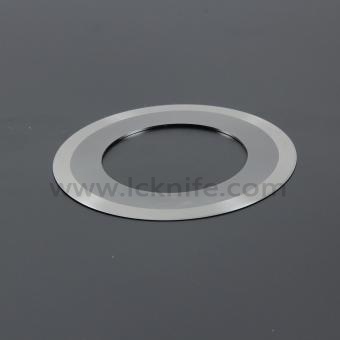
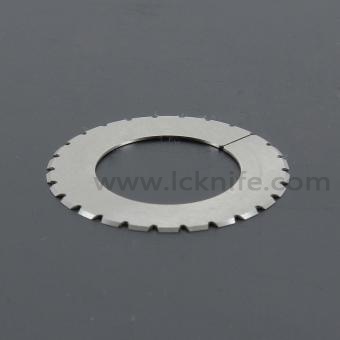
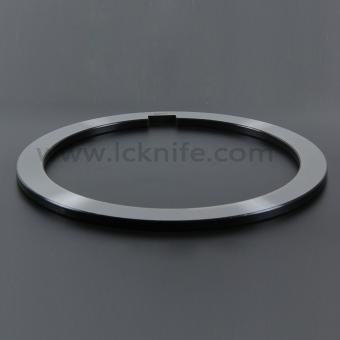
Anwendungskontext: Kreismesser zum Längsschneiden (verwendet zum Schneiden von Metallbändern, Papier, Kunststoffen usw.) sind rotative Präzisionswerkzeuge, die eine hohe Ebenheit, Parallelität, Planlaufgenauigkeit und geringe Kantenrauheit erfordern und daher verschleißfeste und scharfe Materialien benötigen. Beispielsweise bestehen obere Schneidmesser in Hochgeschwindigkeits-Papieraufwicklern typischerweise aus Schnellarbeitsstahl, während dünne Messer in Wellpappenschneidern im Allgemeinen aus Hartmetall gefertigt sind.
-
Auswirkung der Schleifscheibenauswahl: Der Einsatz von zu groben Schleifscheiben mit schlechter Selbstschärfung erzeugt mikroskopische Zacken entlang der Kante. Bei hohen Drehzahlen übertragen sich diese Zacken direkt auf das Schnittmaterial, was zu Gratbildung, Einrissen und welligen Kanten führt. Inkonsistente Papierstreifenbreiten oder gratige Kanten verursachen eine ungleichmäßige Spannung über die Lagen hinweg während des Hochgeschwindigkeits-Aufwickelns, was leicht zu schwerwiegenden Qualitätsmängeln wie Teleskopieren (Verrutschen und Versatz der Rollenseiten), losem Wickeln und Faltenbildung führt. Darüber hinaus entstehen große Mengen an Papierstaub, der die Werkstatt verschmutzt und sich in die Rollenoberflächen einbettet, was die nachfolgende Bedruckung oder Verwendung beeinträchtigt.
-
Optimierungsstrategie: Verwenden Sie hochfeine Schleifscheiben wie feinkörniges Chrom-Edelkorund (PA) oder kunstharz-/keramisch gebundene Diamantschleifscheiben, um extrem glatte, scharfe Kanten zu erzielen, die sich dem Spiegelglanz annähern (bis zu Ra 0,1). Dies erzeugt saubere, gratfreie Kanten und eliminiert praktisch Papierflusen und Staub, was die Qualität des ausgehenden Produkts erheblich steigert. Zudem reduziert es die Reibungswärme zwischen Werkzeug und Schnittmaterial wesentlich, verringert die Häufigkeit des Messerwechsels und verlängert die kontinuierliche Laufzeit erheblich.
III. Messer für die Lebensmittelindustrie: Hygienische Oberflächengüte und Korrosionsbeständigkeit
-
Anwendungskontext: Werkzeuge für die Lebensmittelindustrie – wie Messer für Verpackungsmaschinen, Fleischmesser und Kreismesser für Gemüseschneider – werden überwiegend aus martensitischen Edelstahlsorten hergestellt (z. B. 3Cr13, 4Cr13, SUS420JS, 9Cr18MoV, SUS440B, SUS440C). Zu den Kernanforderungen gehören hygienische Sicherheit, rückstandsfreier Betrieb und Antihaft-Eigenschaften.
-
Auswirkung der Schleifscheibenauswahl:
-
Korrosionsbeständigkeit: Lebensmittelmesser, insbesondere solche, die Meeresprodukte schneiden, erfordern eine hohe Oberflächengüte – mindestens Ra 0,4 für das Fertigschleifen oder Spiegelpolieren. Grobkörnige Schleifscheiben hinterlassen mikroskopische Mikrogräben entlang der Kante. Diese Mikrogräben fangen Schmutz ein, begünstigen Bakterienwachstum und konzentrieren Chloridionen aus dem Meerwasser, die eindringen und die Passivschicht des Edelstahls beeinträchtigen, Schutzschichten an Mikrodefekten aufreißen und Lochfraß bilden, der zu Rost führt.
-
Anti-Adhäsion und Schärfe: Hochwertige Kanten minimieren den Schnittwiderstand beim Schneiden von Lebensmitteln (insbesondere zuckerhaltige, ölige oder feuchtigkeitsreiche Produkte), verhindern das Anhaften und reduzieren die Ansammlung von Lebensmittelrückständen drastisch.
Optimierungsstrategie: Verwenden Sie feinkörnige Edelkorund- (WA) oder Chrom-Edelkorund-Schleifscheiben (PA) mit einer Oberflächengüte von bis zu Ra 0,4, optional ergänzt durch Polierscheiben für Spiegelglanz. Feine PA-Schleifscheiben ergeben eine saubere, glatte Oberfläche, die den Schnittwiderstand minimiert, das Anhaften verhindert und die Ansammlung von Rückständen unterdrückt, wodurch strenge Hygienestandards für die Lebensmittelproduktion erfüllt werden.
Moderne Metallurgie und Metallverarbeitung
Kontext
In der modernen Metallurgie und Metallverarbeitung hängt das effiziente Schneiden von Blechen von der Kernausrüstung ab: metallurgischen Industriewerkzeugen. Diese umfassen in erster Linie Längsschneidemesser und Stahlscherenmesser. Die Leistung dieser Messer bestimmt direkt die Maßhaltigkeit und Kantenqualität von Metallbändern. Anwender konzentrieren sich jedoch oft ausschließlich auf die Auswahl des Grundmaterials, die Wirksamkeit der Wärmebehandlung und die Präzision der Endbearbeitung, während sie den tiefgreifenden Einfluss der Wahl der Schleifscheibe auf die Lebensdauer des Werkzeugs übersehen.
Metallurgische Werkzeuge müssen das Schneiden von Blechen über eine große Spannweite bewältigen – von ultradünnen Folien bis hin zu extrem dicken Platten – und das in komplexen industriellen Umgebungen:
-
Längsschneidemesser: Weit verbreitet beim Kaltwalzen, bei Siliziumstahl, in Beizlinien und bei der Aluminium-/Edelstahlverarbeitung, wobei ein extremer Dickenbereich von 0,05 mm ultradünnen Folien bis zu 25 mm dicken Bandstahlstreifen abgedeckt wird, was gerade Schnitte, null Einrisse und enge Toleranzen erfordert.
-
Stahlscherenmesser: Eingesetzt in verschiedenen Hochleistungsschneidmaschinen, die außergewöhnlich hohe Standards für Schnittgeradheit, Rechtwinkligkeit und gratfreie Leistung erfordern.
Wenn man mit Metallsubstraten unterschiedlicher Härte und Eigenschaften konfrontiert ist, ist eine rationale Materialauswahl die erste Verteidigungslinie und der Schlüssel zur Gewährleistung der Produktionseffizienz:
-
Gängige High-End-Werkzeugmaterialien: Kaltarbeitsstähle (D2, LD), Warmarbeitsstahl (H13), Schnellarbeitsstahl (M2) und Hartmetall.
-
Leistungsanpassung: Durch die Analyse der elementaren Zusammensetzungen und Wärmebehandlungsprozesse sowie die umfassende Abwägung von Festigkeit, Zähigkeit, Verschleißfestigkeit und Warmhärte gegenüber den tatsächlichen Betriebsbedingungen wird das rationalste und kostengünstigste Material ausgewählt. Dies stellt sicher, dass die Messer bei Hochgeschwindigkeitsbetrieb, hoher Stoßbelastung oder in Umgebungen mit hohen Temperaturen nicht ausbrechen oder schnell verschleißen, wodurch massive Produktivitätsverluste durch häufige ungeplante Messerwechsel vermieden werden.
Typische industrielle Anwendungsfälle
Der immense Wert der Kombination von Hochleistungsmaterialien mit Präzisionsschleifprozessen in der tatsächlichen Produktion wird anhand von zwei typischen industriellen Fällen demonstriert:
Fall I: Längsteil- und Aufwickellinie für verzinkte Bleche – Überwindung häufiger Nachschleifprobleme mit Messern aus "D2-Material"
-
Kundenhintergrund: Ein großes Unternehmen für Stahlbau und Blechverarbeitung, das hauptsächlich 2 mm dicke verzinkte Bleche verarbeitet und Scherenmesser aus Kaltarbeitsstahl D2 in der Größeϕ310×180×15
-
Schmerzpunkte & Herausforderungen: Übermäßig kurze Lebensdauer, die häufiges Nachschleifen und Austauschen erfordert, was zu häufigen Stillständen der Linie führt. Die Produktionslinie erforderte alle paar Tage Stillstände, um Messer auszutauschen oder nachzuschleifen, was zu massiver Produktivitätsverschwendung durch häufige Spieleinstellungen und Werkzeugwechsel führte. Ein Messersatz konnte nur 1.000 Tonnen verzinkte Bleche schneiden. Darüber hinaus entwickelten die geschorenen Stahlplatten Kantengrate und stießen Zinkpulver ab, was die Kosten für die Sekundärverarbeitung in die Höhe trieb.
-
Lösung & Ergebnisse: Obwohl D2 nicht die Schlagzähigkeit von DC53 oder LD aufweist, sollten D2-Messer mit 58-60 HRC das Scheren von 2 mm verzinkten Blechen problemlos bewältigen. Warum trat dieses Versagen wiederholt auf? Die Werkzeuglieferanten von Licheng führten eine Online-Inspektion durch: Die Spektrometeranalyse bestätigte das Material als D2, die Rockwell-Härte wurde mit 59 HRC getestet und die CMM-Dimensionsprüfungen zeigten keine Anomalien. Dennoch bestand das Problem weiterhin. Eine anschließende Inspektion ergab eine schlechte Oberflächengüte des Außendurchmessers bei neuen Messern (gemessen mit Ra 1,0), was auf unsachgemäße Schleifmethoden hindeutete. Nachforschungen ergaben, dass der Betrieb Normalkorund- und 46M-Edelkorund-Schleifscheiben verwendete. Da diese Scheiben härter sind, führt das Schleifen von Materialien mit hoher Härte zu einer schlechten Oberflächengüte. Bei hohen Vorschüben oder unzureichender Kühlung stiegen die Oberflächentemperaturen des Werkstücks stark an. Da D2 ein kohlenstoffreicher, chromreicher ledeburitischer Stahl mit ausgeprägter Karbidseigerung ist, ist er sehr empfindlich gegenüber Reibungswärme; das Anlassen und Erweichen beginnt oberhalb von 480 °C, wodurch die Härte drastisch abfällt. Makroskopisch äußerte sich dies in einem katastrophalen Einbruch der Messerlebensdauer.
Wir haben die Schleifscheiben für den Kunden durch weiße Edelkorund-Schleifscheiben mit 60–80K ersetzt und die Bediener angewiesen, die Schleiftiefe pro Durchgang unter 0,01 mm zu halten, abgeschlossen mit 2 bis 3 Ausfeuerungsdurchgängen, um thermische Oberflächenspannungen abzubauen. Die Kontrolle der Schleiftemperaturen verhinderte Anlassverbrennungen, die die Oberflächenhärte des Außendurchmessers beeinträchtigen, was andernfalls beim Schneiden von verzinkten Blechen zu beschleunigtem Mikro-Ausbrechen und Verschleiß führt. Zudem wurde ein häufiges Abrichten der Schleifscheiben eingeführt, um eine Kornpassivierung und die Entstehung von Reibungshitze zu verhindern.
- Praktische Vorteile: Die umfassende Lebensdauer der modifizierten Stahlscherenmesser stieg im Vergleich zu früheren Durchläufen fast um das Dreifache, wobei der Ausstoß auf nahezu 3.000 Tonnen anstieg. Ungeplante Ausfallzeiten durch Messerwechsel gingen drastisch zurück, die Schnittflächen der Bleche wurden glatt und gerade, und Probleme mit Kantenabsplitterungen und Gratbildung wurden vollständig gelöst.
Fall II: Siliziumstahl- und Präzisions-Aluminiumfolien-Schneidanlage — „Langlebige Haltbarkeit“ durch Mikrometer-Schleifen erreicht
- Kundenhintergrund: Ein High-Tech-Kalandrierunternehmen, das auf Kernmaterialien für Motoren für neue Energien (Siliziumstahlbleche) und ultradünne Präzisions-Aluminiumfolien (Dicke von 0,05 mm bis 2,0 mm) spezialisiert ist und nahezu höchste Präzision und Oberflächengüte für Coil-Schneidmesser verlangt.
- Schmerzpunkte & Herausforderungen: Siliziumstahlbleche zeichnen sich durch hohe Härte und Abrasivität aus, während Aluminiumfolien sehr anfällig für Gratbildung an den Kanten oder thermische Verformung durch Werkzeugreibung sind. Zuvor beschaffte kreisförmige Schneidmesser aus LD-Legierungsmaterial hatten zwar eine konforme Körperhärte, aber eine unzureichende Oberflächengüte entlang der Messerkanten und Flanken, was zu hohem Schnittwiderstand, starkem mikroskopischem Reißen und anhaltend hohen Werkzeugwechselfrequenzen führte.
- Lösung & Ergebnisse: Das Team von Licheng optimierte den Fertigstellungsprozess für diese Schneidmesser:
1: Scheibenauswahl: Umstellung auf mittelharte weiße Edelkorund-Schleifscheiben für das Präzisionsschleifen, wobei die exzellente Selbstschärfung genutzt wird, um Oberflächenverbrennungen durch Schleifhitze zu eliminieren.
2: Parametersteuerung: Maximierung der Umfangsgeschwindigkeit der Schleifscheibe bei gleichzeitiger synchroner Drosselung der Umfangsgeschwindigkeit und des Längsvorschubs des Messerwerkstücks.
3: Praktische Vorteile: Durch das verfeinerte Schleifen wurden unzählige mikroskopische Schleifkratzer auf der Messeroberfläche außergewöhnlich gleichmäßig und fein gehalten, was die Oberflächenrauheit deutlich senkte.
Ergebnis: Beim Hochgeschwindigkeitsschneiden von Siliziumstahl und Aluminium sanken der Widerstand im Schneidspalt und die Reibungshitze drastisch. Die kontinuierliche Online-Betriebszeit der Messer stieg um über 50 %, die Kanten der geschnittenen Streifen waren völlig grat- und wellenfrei, und die Produktausbeute erzielte einen qualitativen Sprung.
Als spezialisierter Hersteller verschiedenster Industriemesser verpflichtet sich Licheng dazu, Materialwissenschaft, Wärmebehandlungstechnologie, Präzisionsfertigungsverfahren und strenge Qualitätsstandards in jedes von uns produzierte Coil-Schneidmesser und Scherenmesser einfließen zu lassen.


 IPv6-Netzwerk unterstützt